
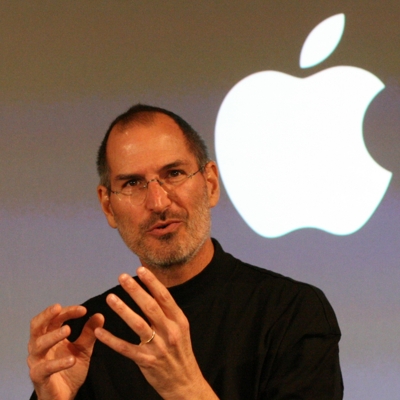
The passing of Apple co-founder and CEO Steve Jobs on October 6 generated an unprecedented amount of coverage and eulogizing – unprecedented for the leader of a tech company. It isn’t that Jobs was a particularly warm person or a recognized philanthropist – a la Bill Gates. Instead, Jobs is remembered for an obsessive drive to (re)define the role of technology in our lives, and for the products he pushed Apple to make to realize that vision.
Because of his success in that pursuit, Jobs’ death also highlights a complex intersection of the man and the brand, Apple, and has led some to wonder if the latter can survive without the former.
I first used an Apple product in 1988, in graduate school, when my roommate bought a MacPlus computer. It was a small computer, with a black and white monitor and a 20 MB hard drive (yes, you read that right, the hard drive was 20 megabytes – and at the time, it seemed huge). But the Mac was easy to use, especially for a computer novice like I was at the time. And the Mac was much easier to understand than another friend’s PC (with a 286 processor – remember those?) which could only show you words on its screen, but not how those words would look on the printed page, like the Mac could.
I decided then that when I got a computer, it would be a Mac. And since then I have had several Macs – as well as an iPod, an iPhone, and most recently, an iPad. Call me an Apple nerd (I’ve been called worse), but the fact is, all of the Apple products I’ve owned share those common characteristics that define the Apple brand – they are easy to use, they look good, and they do what they are supposed to do.
For all the adulation that Apple products (rightly) receive for their good looks, I have always thought that it was the ability to “customize” their use to my specific purposes that was most important. Apple marketed its products to highlight that aspect as well – not so much telling you what the device could do as what you could do with it. Even Apple’s TV commercials, as my son once observed, are in the “first person;” they show the device and a pair of hands from the perspective you would see when using it.
A big part of the reason Apple has flourished, especially over the past decade, was that Steve Jobs made a unique brand promise and his company never failed to keep it. As a result, Apple garnered legions of fans and billions of dollars in revenue and profit.
Will Apple be able to keep Jobs’ brand promise now that he is gone? I know the company will try, and I along with millions of others hope it will succeed. The coming years will indeed show to what extent the man and the brand were one, and to what extent they weren’t. Apple’s legacy will be built on the former, but its future success will depend on the latter.

 As a senior vice president at Cookerly, Matt helps organizations protect and advance their reputations and bottom lines through strategic communications programs. Using creativity, planning and flawless execution, he works with a team to deliver compelling public relations campaigns that produce results and support clients’ business objectives.
 As senior vice president at Cookerly, Mike Rieman specializes in building and maintaining relationships with the media and has an excellent track record of landing significant placements in print and broadcast media including USA Today, Wall Street Journal, Bloomberg and Money Magazine.
 As vice president of Cookerly, Sheryl Sellaway uses her extensive corporate communications background to lead consumer PR efforts, deliver strategy for marketing programs and share expertise about community initiatives.

I’m PROUD to be called an Apple nerd! I have no doubt that the company will maintain its positioning for years to come.